Methylene Blue 10mg
Same mitochondrial electron carrier mechanism at standard therapeutic dose.
 Medically reviewed by Dr. Jonathan Snipes, MD. Last reviewed May 6, 2026.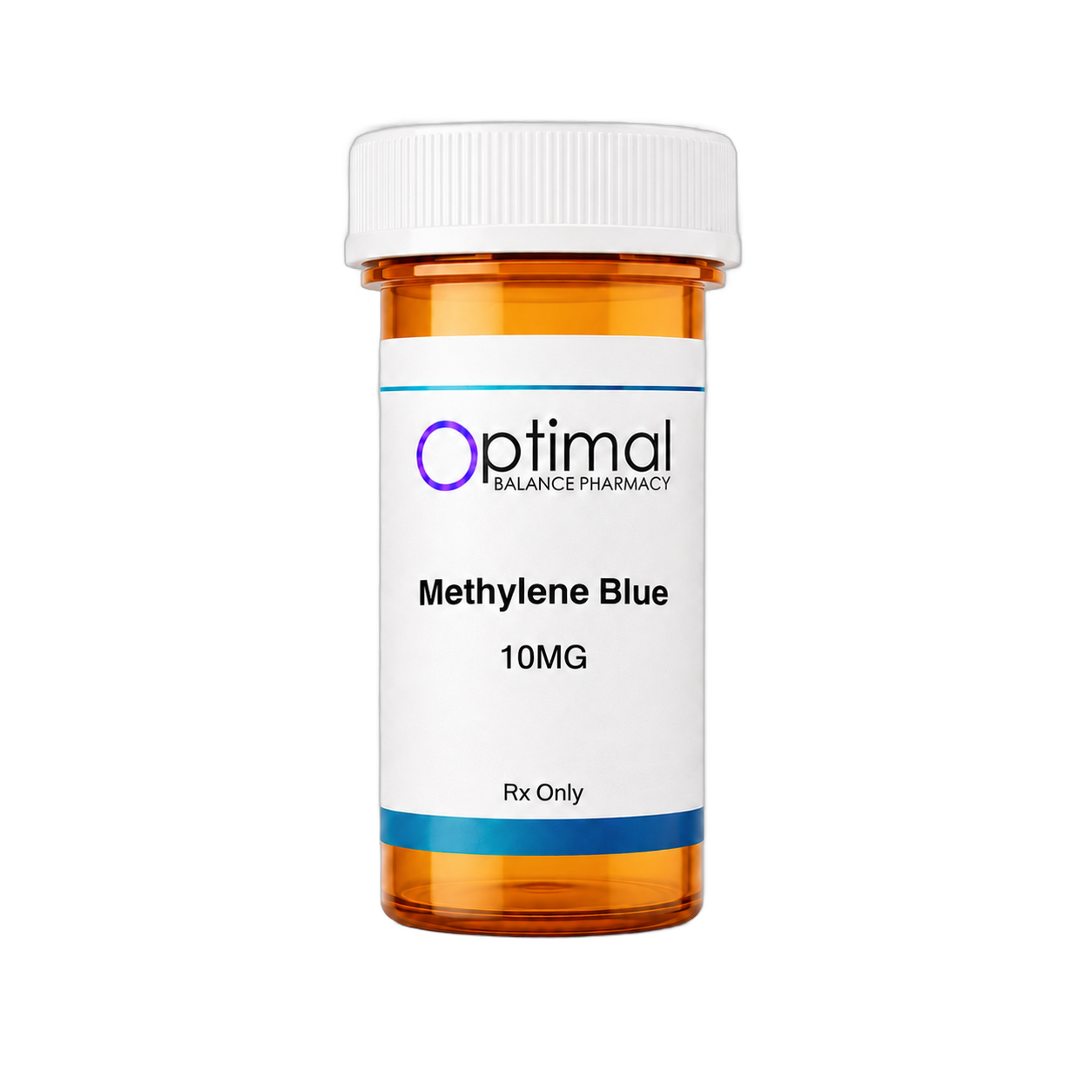
What It Is
Standard dose Methylene Blue for those who have established tolerance at 5mg and are ready for the standard nootropic dose.
How It Works
Same mechanism as 5mg. Mitochondrial enhancement and neuroprotection. At the standard therapeutic dose for cognitive benefits.
Who It's For
Established methylene blue users looking for standard cognitive enhancement dosing.
Who Should Avoid It
Important: this applies at every strength, including 5 mg. Methylene blue is a potent MAO-A inhibitor at every strength we offer. This is not something that only happens at higher strengths. Do not take methylene blue if you are taking any of the following: SSRIs, SNRIs, MAOIs, tricyclic antidepressants, lithium, tramadol, dextromethorphan, meperidine, triptans, St. John's Wort, or any other serotonergic medication. The combination can cause serotonin syndrome, which can be fatal. Tell every other prescriber you see that you are taking methylene blue. The most likely way this goes wrong is a clinician starting you on an antidepressant without knowing, and they have no reason to think of a blue capsule as an MAOI. Methylene blue is also contraindicated in G6PD deficiency, which carries a risk of hemolysis. G6PD status is confirmed with a simple blood test. Risk is higher in people of Mediterranean, African, or Southeast Asian descent.
Protocol & Pricing
OBP Pharmacy Price
$2.00/cap
You pay pharmacy price. No markup.
Starting Dose
10mg/cap
Form
Capsule (10mg)
Dosing Protocol
1 capsule (10mg) daily by mouth in the morning.
Beyond Use Date
180 Days from compounding (USP <795>)
Optimal Balance Pharmacy assigns this date and prints it on your vial label. Always follow the label. Once a multi-dose vial is punctured, the in-use date on the label is shorter than the compounding date shown here.
Stacking Guide
Stacks Well With
Do Not Combine With
Mitochondrial cognitive capsule (MB-5 to MB-25)
Read the Methylene Blue 10mg protocol guide
Mitochondrial electron carrier at low dose, MAO-A inhibitor at any dose. SSRIs, SNRIs, MAOIs, TCAs are hard contraindications. Hormetic dose curve. Medication screening is mandatory.
Related Peptides
How to get Methylene Blue 10mg prescribed online
Methylene Blue 10mg is available by prescription through a licensed telehealth visit and dispensed for human use by a named 503A pharmacy. That is what separates it from research-use-only vials sold without a prescription. There is no subscription and no membership, just a one-time visit fee.
- 1
Complete a $39 medical visit. Answer a short intake about your health history and your goals for Methylene Blue 10mg. The $39 fee is the only charge Rx Peps Direct collects, paid once, not a recurring subscription.
- 2
A licensed provider reviews it. A US-licensed nurse practitioner or physician reviews your intake and, if Methylene Blue 10mg is appropriate for you, writes a patient-specific prescription. The starting dose is typically 10mg/cap.
- 3
The pharmacy compounds and ships it. Optimal Balance Pharmacy, a 503A pharmacy in Texas, compounds Methylene Blue 10mg and ships it ready to use in its dispensed form by FedEx overnight. Your fill is Capsule (10mg), and you pay the pharmacy $2.00/cap at wholesale, with no clinic markup, plus a $15 flat FedEx overnight shipping fee charged by the pharmacy.
Rx Peps Direct prescribes Methylene Blue 10mg in the 29 jurisdictions its medical team is licensed in. Start a $39 visit or browse the full Cognitive & Brain Health range. Comparing services first? See how Rx Peps Direct stacks up against seven other providers in our best telehealth for compounded peptides comparison.
Common questions about Methylene Blue 10mg
- What is methylene blue?
- Methylene blue is a synthetic phenothiazine dye that has been used in medicine since the 1890s, originally as a malaria treatment and later as an FDA-approved drug for methemoglobinemia. It is a small molecule with documented activity at the mitochondrial electron transport chain, where it acts as an alternative electron carrier and supports ATP production under conditions of mitochondrial stress. The methylene blue capsule Optimal Balance Pharmacy compounds for Rx Peps Direct prescriptions is a 10 mg capsule at $2 per capsule with a $39 medical visit fee.
- What does methylene blue do for cognition and mitochondrial function?
- Methylene blue donates electrons to complex IV of the mitochondrial electron transport chain, supporting ATP production when standard electron flow is impaired. Animal and limited human data show neuroprotective effects in models of cognitive decline, improved memory in low doses, and antioxidant activity through cycling between reduced and oxidized forms. Most clinical use is for cognitive support, post-concussion recovery, and as an adjunct in select neurodegenerative protocols. Effects on cognition are typically reported within hours to days at low oral doses.
- How much methylene blue should I take per day?
- The Rx Peps Direct 10 mg capsule (mb-10) is the standard nootropic dose for adults who have already established tolerance at a lower dose (5 mg or below). Higher doses (15 mg and 25 mg) are available for established users only. Doses above 100 mg per day enter pharmacological territory and require clinical supervision. Take with water on an empty stomach, typically once daily in the morning. Your provider sets the dose per your tolerance and goals.
- Is methylene blue safe?
- Pharmaceutical-grade methylene blue at low oral doses (under 50 mg per day) has a strong safety record over more than a century of clinical use. Common transient effects include blue or green discoloration of urine and tongue and rare mild GI upset. Methylene blue is a monoamine oxidase inhibitor (MAOI) at every dose, including 5 mg, which creates a serious serotonin-syndrome risk if combined with SSRIs, SNRIs, MAOIs, or other serotonergic medications. Rx Peps Direct automatically denies methylene blue to patients on any of those medications and to anyone with G6PD deficiency.
- How does methylene blue work?
- At low doses methylene blue acts as a redox shuttle in the mitochondrial electron transport chain, accepting and donating electrons between complexes and supporting ATP production when standard flow is impaired. It also has antioxidant properties through its reduction-oxidation cycling. It is also a potent MAO-A inhibitor at every dose, which is the basis for the SSRI/SNRI contraindication.
- What are the documented benefits of methylene blue?
- Documented or studied uses include: clinical treatment of methemoglobinemia (FDA-approved indication), cognitive support and memory in animal models, neuroprotection in models of stroke and neurodegeneration, photodynamic therapy as an antimicrobial agent, and adjunctive use in some malaria protocols. Cognitive enhancement at low doses is widely reported by users but human trial data on cognitive endpoints is still limited. Use under provider supervision to ensure dose, source, and contraindication screening are correct.
- What medications cannot be combined with methylene blue?
- Do not combine methylene blue with SSRIs (sertraline, fluoxetine, escitalopram, etc.), SNRIs (venlafaxine, duloxetine), MAOIs, tricyclic antidepressants, lithium, tramadol, dextromethorphan, or any other serotonergic medication. The combination can cause serotonin syndrome, which is potentially life-threatening. Patients with G6PD deficiency must not take methylene blue at any dose. Rx Peps Direct providers screen for all of these during intake; if any apply, the prescription is automatically denied.