- What is an NAD+ injection?
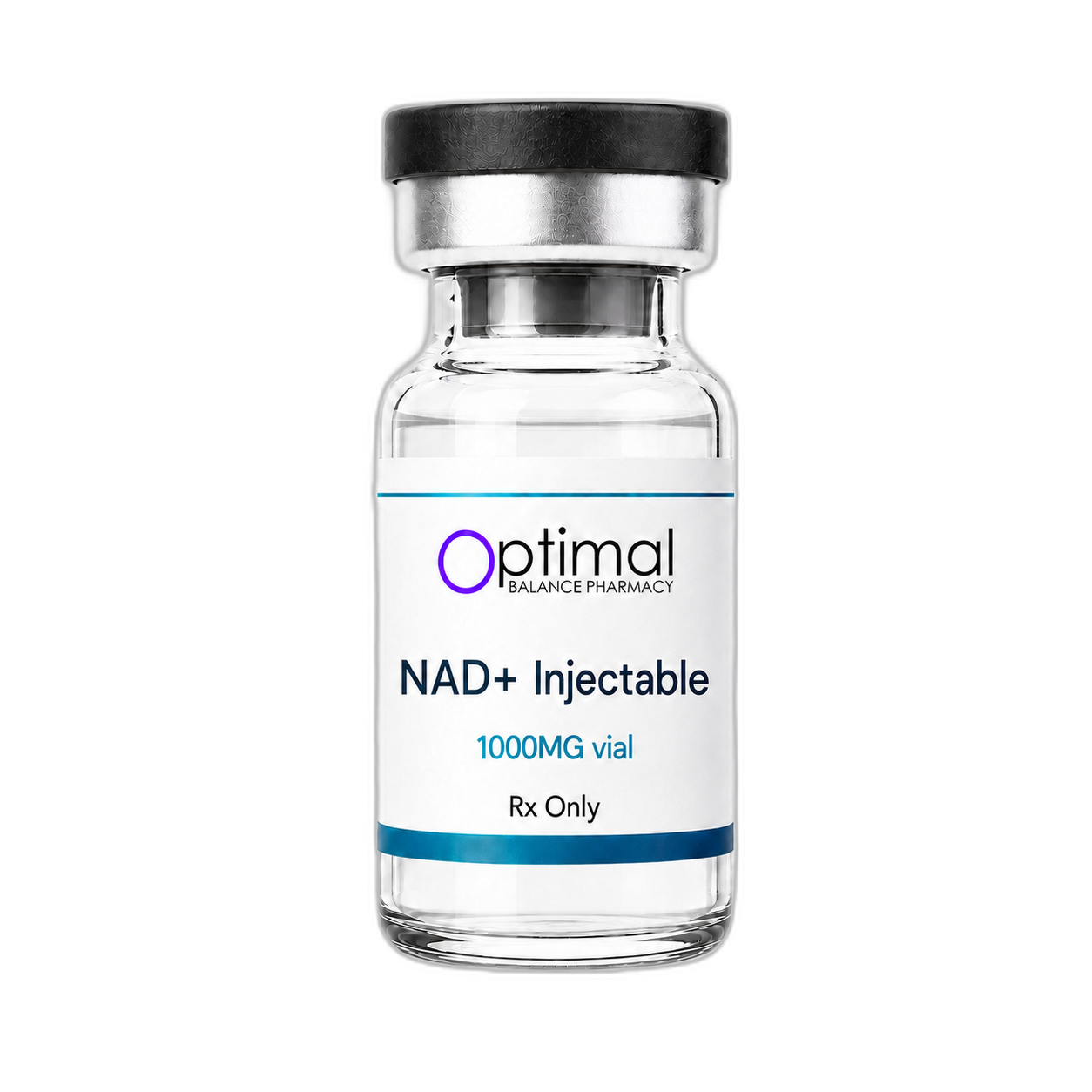
- An NAD+ injection is a sterile compounded injectable that delivers nicotinamide adenine dinucleotide (NAD+) directly into circulation, bypassing the digestive system. NAD+ is a coenzyme present in every cell that drives mitochondrial energy production, DNA repair, and sirtuin signaling. Levels decline with age (roughly 50 percent between 40 and 60). The NAD+ injectable a licensed U.S. 503A compounding pharmacy compounds for Rx Peps Direct prescriptions is a 100 mg/mL solution dispensed in 10 mL vials (1,000 mg total) at $100 with a $39 medical review.
- What does an NAD+ injection do for energy and longevity?
- NAD+ replenishment supports mitochondrial ATP production, activates sirtuin-1 (a longevity-associated enzyme), and provides substrate for PARP-1 DNA repair. Patients commonly report improved daytime energy, sharper cognitive focus, better stress tolerance, and improved exercise recovery within the first 2 to 4 weeks of consistent dosing. Long-term mechanistic data on extending healthspan in humans is still emerging; the strongest evidence supports NAD+ as a metabolic and cognitive support intervention rather than a guaranteed longevity drug.
- How much NAD+ should I inject?
- No clinically validated subcutaneous NAD+ dose exists, so your label and prescriber set this, not a standard protocol. The Rx Peps Direct starting dose for patients new to NAD+ is 50 units (50 mg) on a U-100 insulin syringe drawn from the 100 mg/mL vial, three times weekly (for example Monday, Wednesday, Friday). Patients already taking NAD+ may be prescribed 100 mg three times weekly. Keep the syringe in mind when reading dose figures elsewhere: at 100 mg/mL, 50 mg is half a U-100 syringe, 100 mg fills one completely, and 200 mg is 2 mL, which cannot be drawn into a single U-100 syringe at all. NAD+ injections can cause flushing or chest tightness if pushed too fast, so start low, push the plunger slowly, and increase only on your provider's instruction.
- Where to give an NAD+ injection?
- Subcutaneously into the abdomen, upper outer thigh, or back of the upper arm using a 31-gauge, 5/16-inch (8 mm) needle on a U-100 insulin syringe. Push slowly over 30 to 60 seconds to minimize flushing or chest pressure, which are common with NAD+ administration. Some providers prescribe intramuscular delivery into the deltoid or gluteal site for faster onset; ask your provider which delivery is right for your protocol.
- How long does NAD+ stay in your system?
- NAD+ has a short plasma half-life (under 1 hour) because it is rapidly taken up by cells and incorporated into the cellular NAD+ pool. The metabolic effects from a single dose last roughly 24 to 48 hours as cellular NAD+ levels rebuild and the activated sirtuin and PARP pathways continue working. Most protocols dose 2 to 3 times per week to maintain elevated cellular NAD+ over time.
- How fast does an NAD+ injection work?
- Acute energy and focus effects are typically reported within 1 to 2 hours of injection. Cognitive and mood effects build over the first 2 weeks of consistent dosing as cellular NAD+ stores rebuild. Long-term metabolic and cellular health effects continue building through the first 8 to 12 weeks of a protocol. Onset varies with starting NAD+ status; patients with lower baseline levels often feel a faster initial response.
- Why is the compounded NAD+ injection 100 mg/mL?
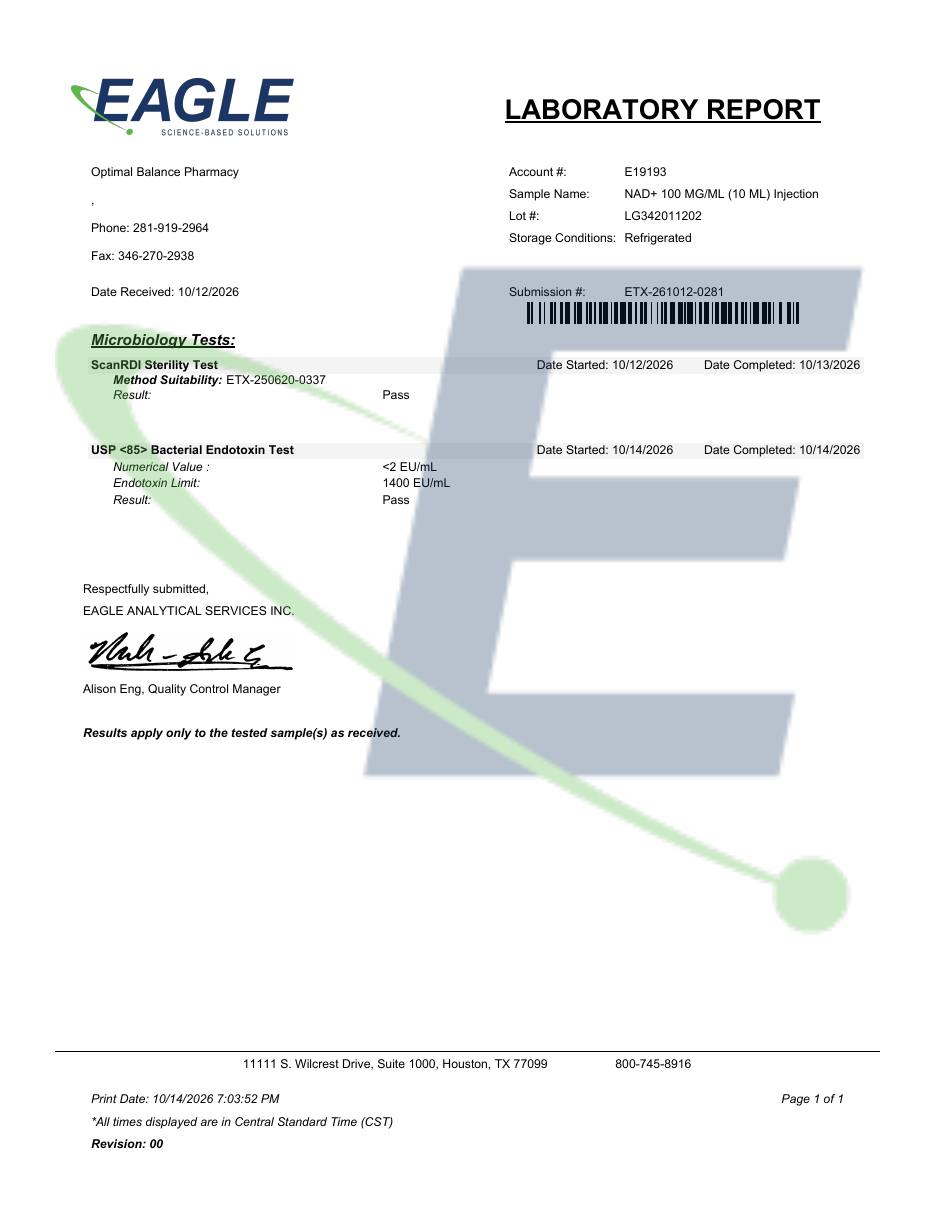
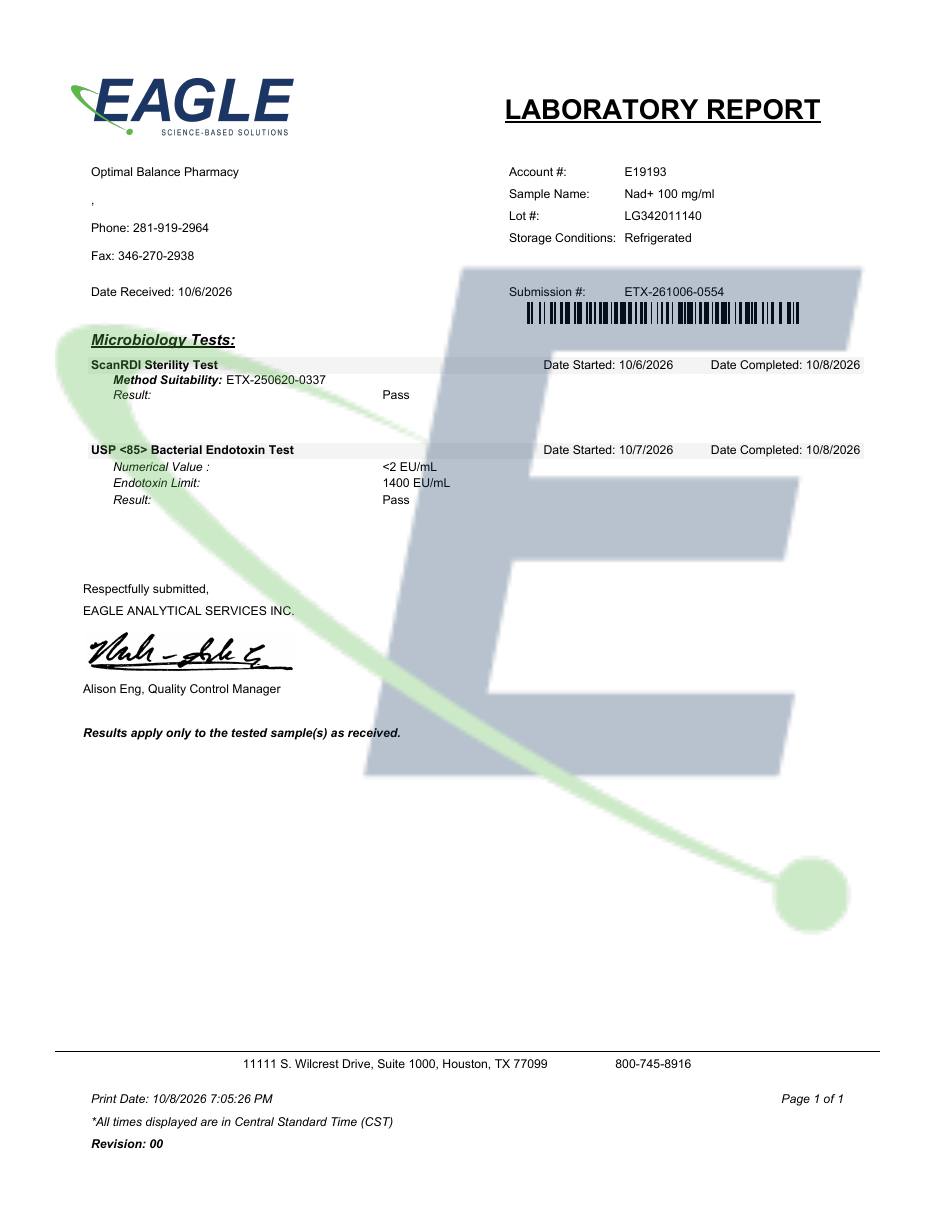
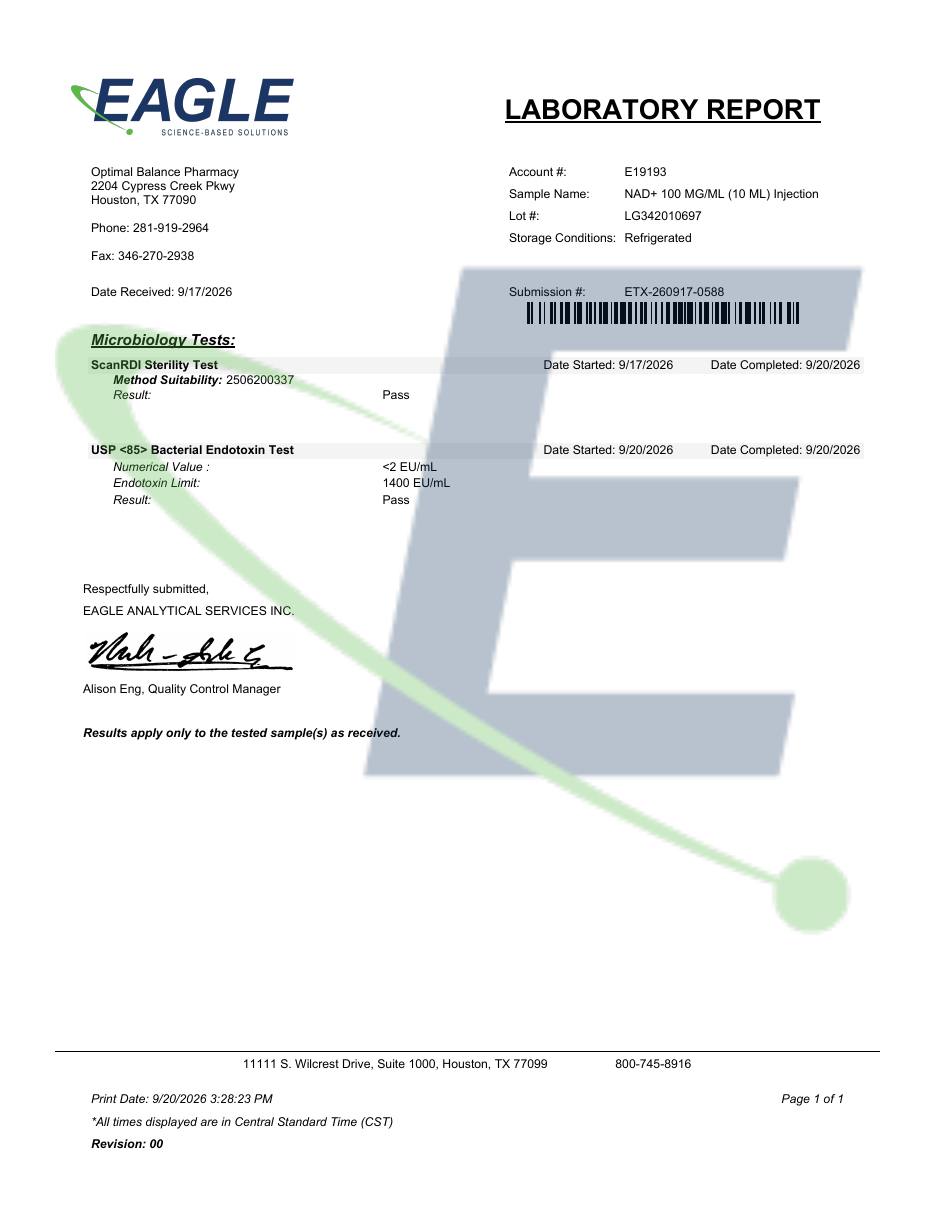
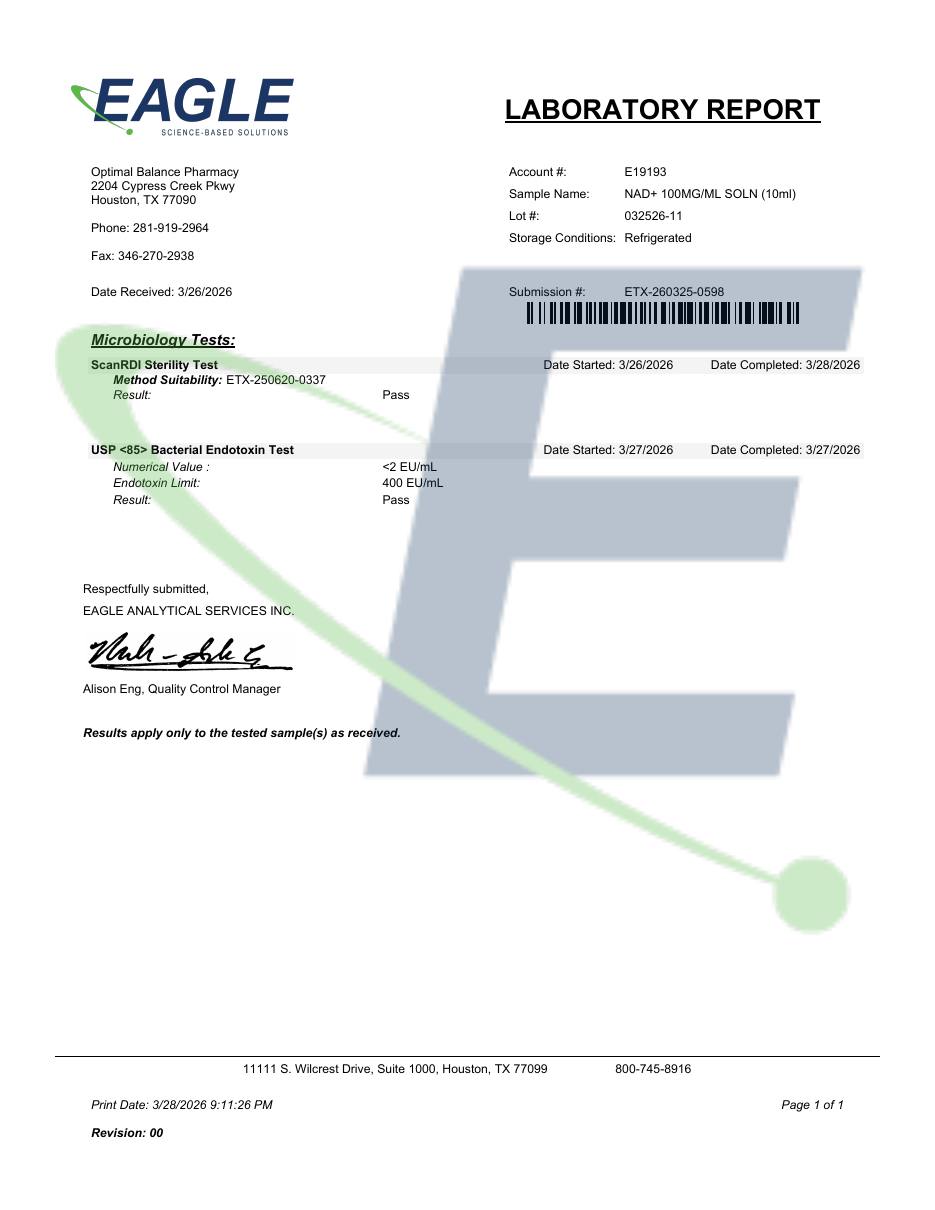
- 100 mg/mL is the most common compounded NAD+ concentration because it allows convenient dosing across the typical therapeutic range (20 to 200 mg per injection) with low injection volumes. At the Rx Peps Direct starting dose of 50 mg three times weekly, the 1,000 mg in a 10 mL vial is 20 doses, which lasts between 6 and 7 weeks. At 100 mg three times weekly it is 10 doses, a little over 3 weeks. A licensed U.S. 503A compounding pharmacy compounds and tests every batch for sterility (ScanRDI or Celsis) and bacterial endotoxin (USP <85>); the Certificate of Analysis is published on this product page. The vial ships pre-reconstituted and ready to inject.