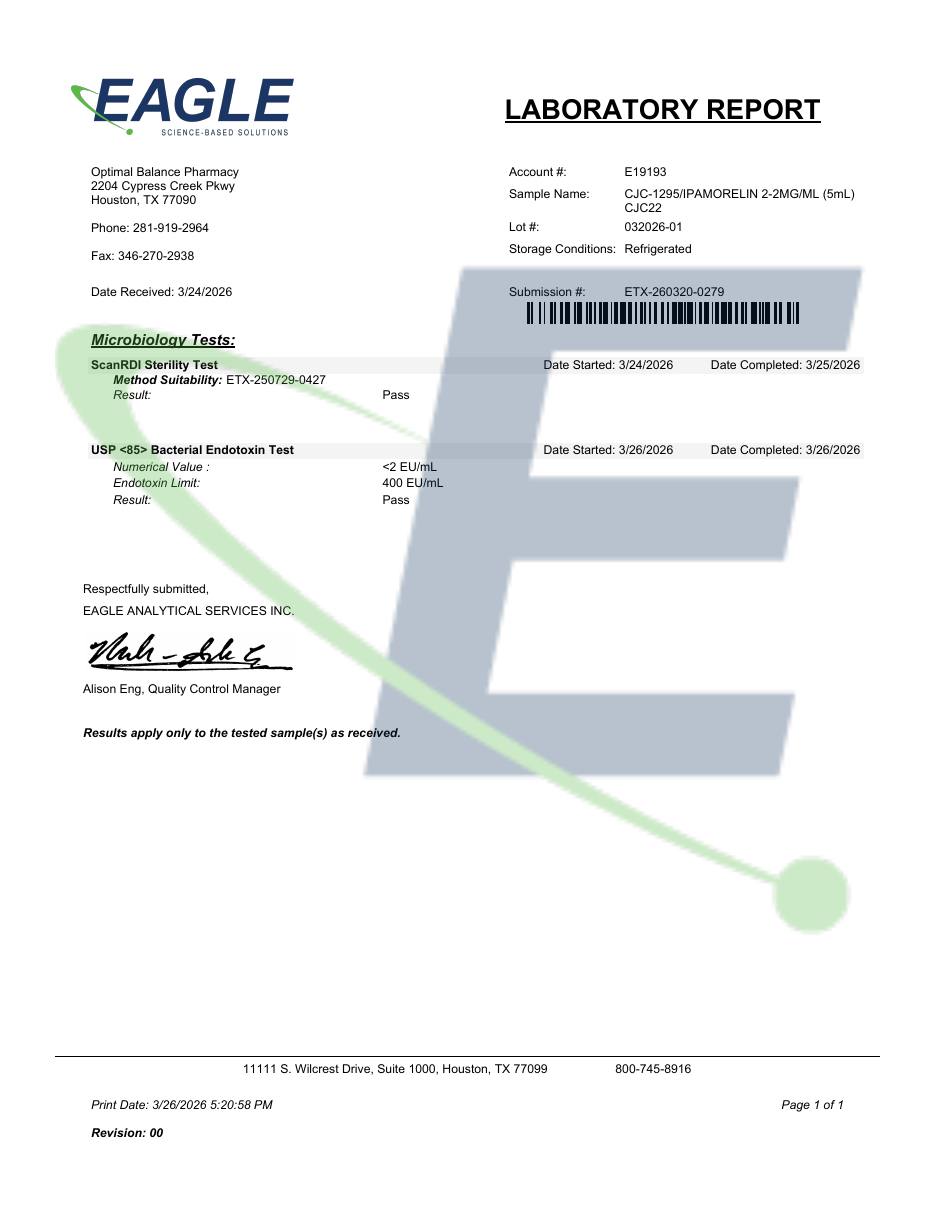
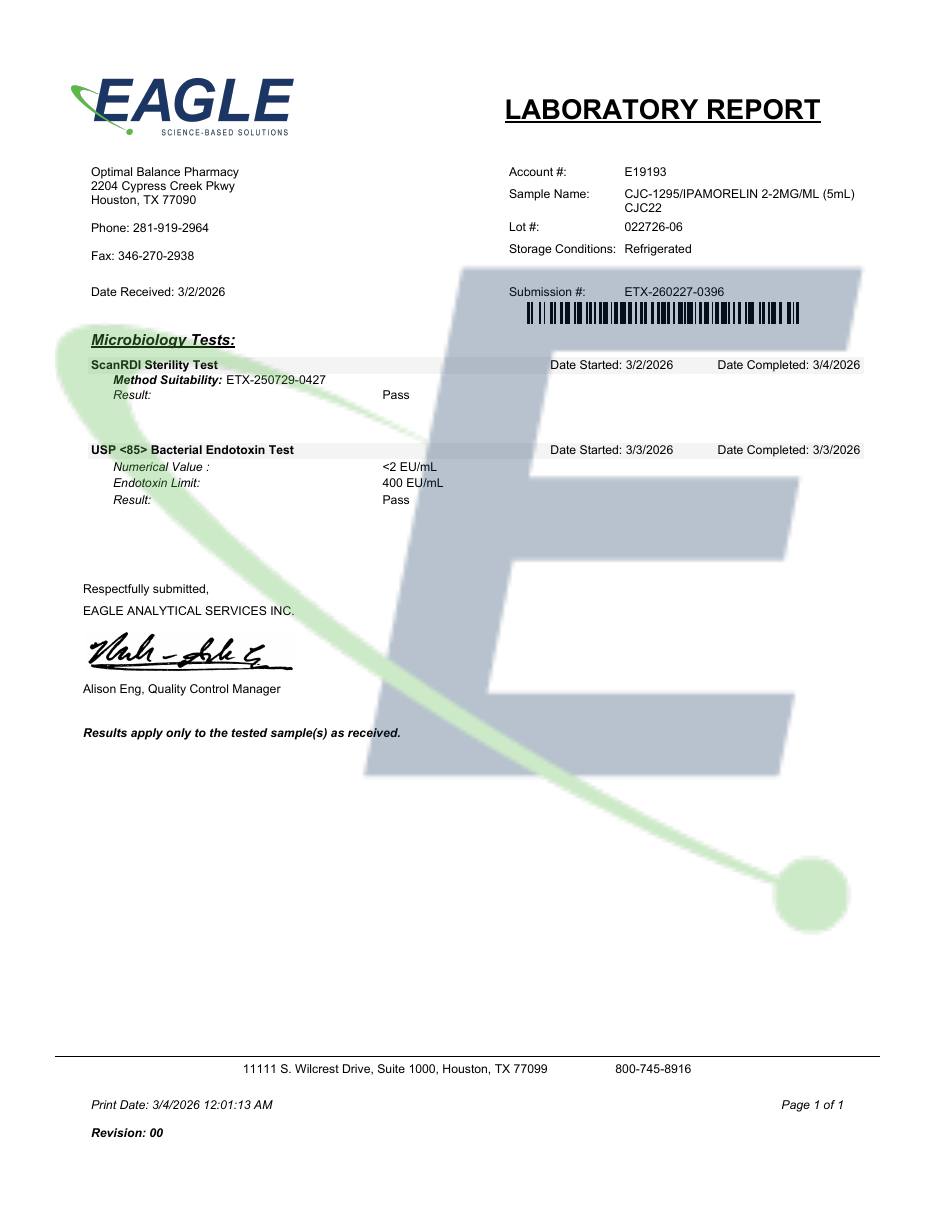
- What is CJC-1295/Ipamorelin and how do the two peptides work together?
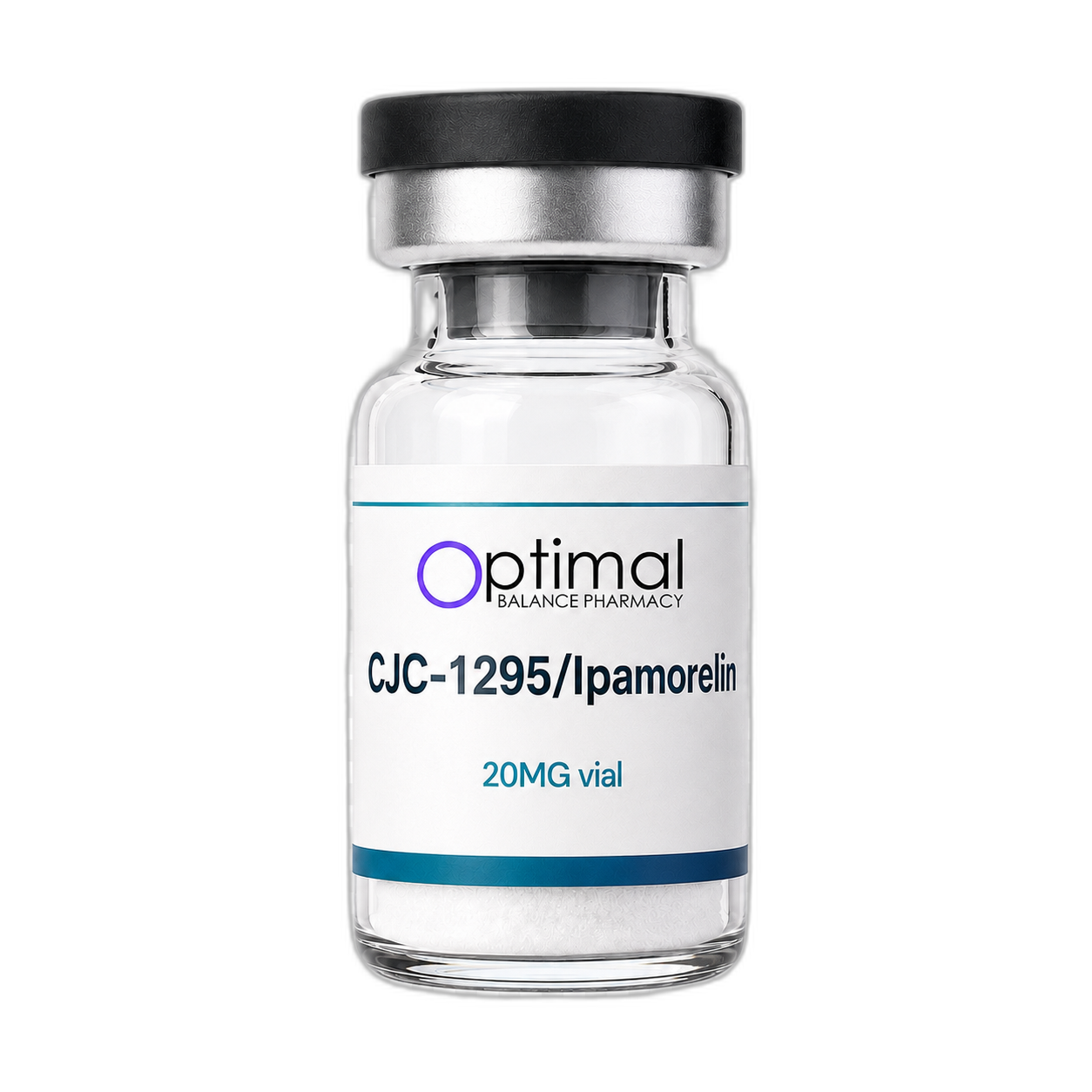
- CJC-1295/Ipamorelin is a compounded blend of two growth hormone secretagogues that act on separate pathways. CJC-1295 is a growth hormone-releasing hormone (GHRH) analog; ipamorelin is a ghrelin receptor agonist. Combining them is a mechanistic rationale rather than a proven one: no controlled human trial has tested the two together, so whether they outperform either ingredient alone is not established. The claim that ipamorelin gives a clean pulse without raising cortisol or prolactin comes from a 1998 study in rat cells, rats and swine. The 10 mg + 10 mg vial is $100 from the pharmacy, plus a $39 medical review and $15 shipping, for a listed initial total of $154.
- Does CJC-1295/Ipamorelin actually work for growth hormone support?
- Not in the sense that phrase implies, and the detail matters. The human CJC-1295 trials that showed GH and IGF-1 increases used the long-acting DAC form, given weekly or every two weeks, with a reported half-life of 5.8 to 8.1 days. This prescription is CJC-1295 without DAC, a different product on a nightly schedule, so those results do not transfer to it. The most-cited ipamorelin selectivity work is animal research, and a separate human ipamorelin programme studied intravenous use for postoperative ileus, a different route and purpose. The blend itself is used widely in age-management practice, but wide use is not evidence. No controlled human trial supports the combination for body composition, sleep or recovery, and no outcome timeline should be promised from it.
- How much CJC-1295/Ipamorelin should I inject?
- The Rx Peps Direct starting protocol is 20 units, which is 0.2mL from the 2mg/mL vial and delivers 0.4 mg of each peptide, five nights per week. It is a fixed-ratio vial, so one volume sets both doses together and they cannot be adjusted separately. No clinically validated dose or cycle length has been established for this combination, and protocols published on forums or by research-vendor sites often describe the DAC form or different concentrations and are not interchangeable with this product. Your label and prescriber set your actual dose.
- When should I take CJC-1295/Ipamorelin?
- Most prescribers here direct an evening dose, on the reasoning that it sits alongside the body's overnight GH release. Treat that as clinic preference rather than a validated instruction: no study has tested this formulation against alternative timings. The same applies to the common advice to inject fasted, with nothing to eat for about two hours beforehand. It is a widely followed practice rather than something demonstrated for this product. Follow the timing on your prescription label and ask your prescriber before changing it.
- Where do I inject CJC-1295/Ipamorelin?
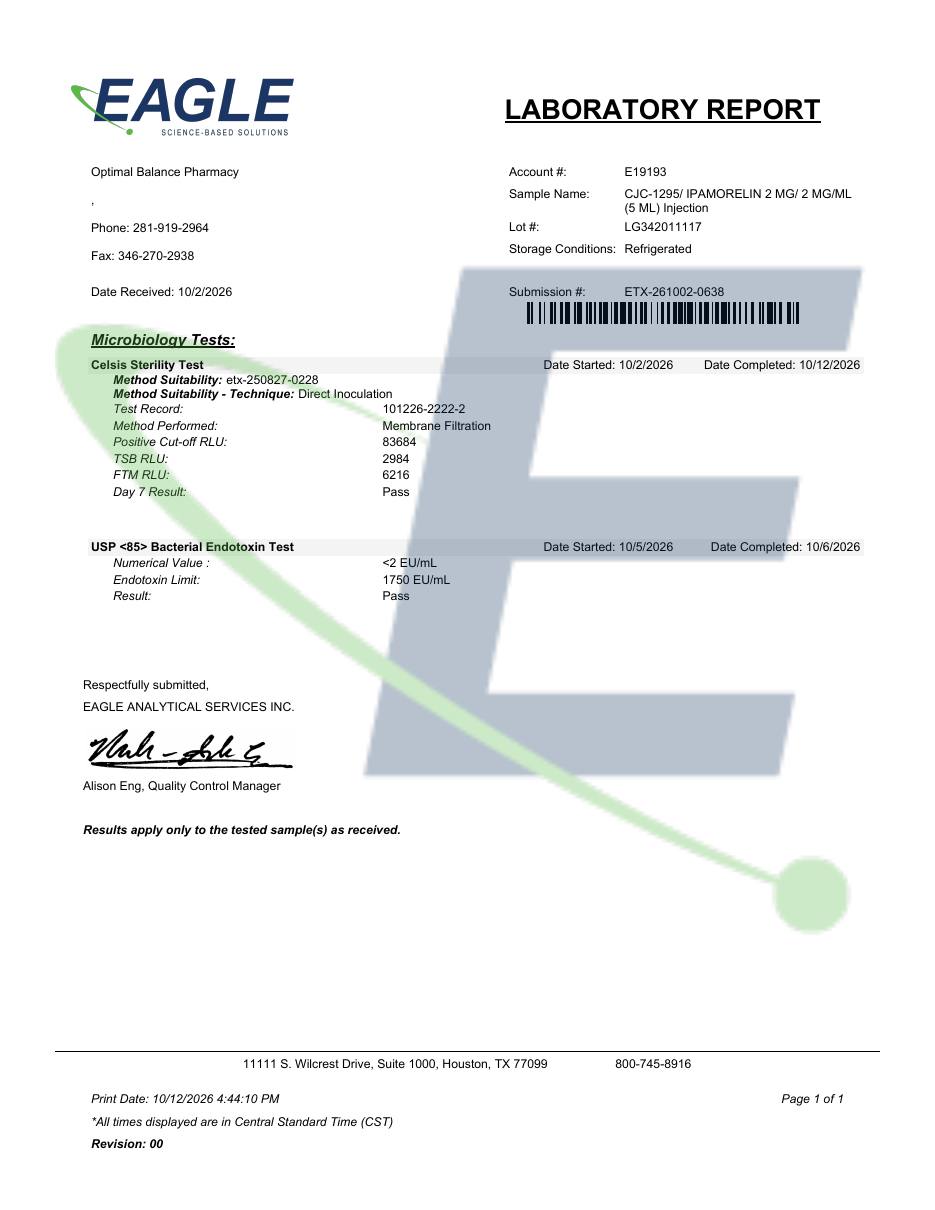
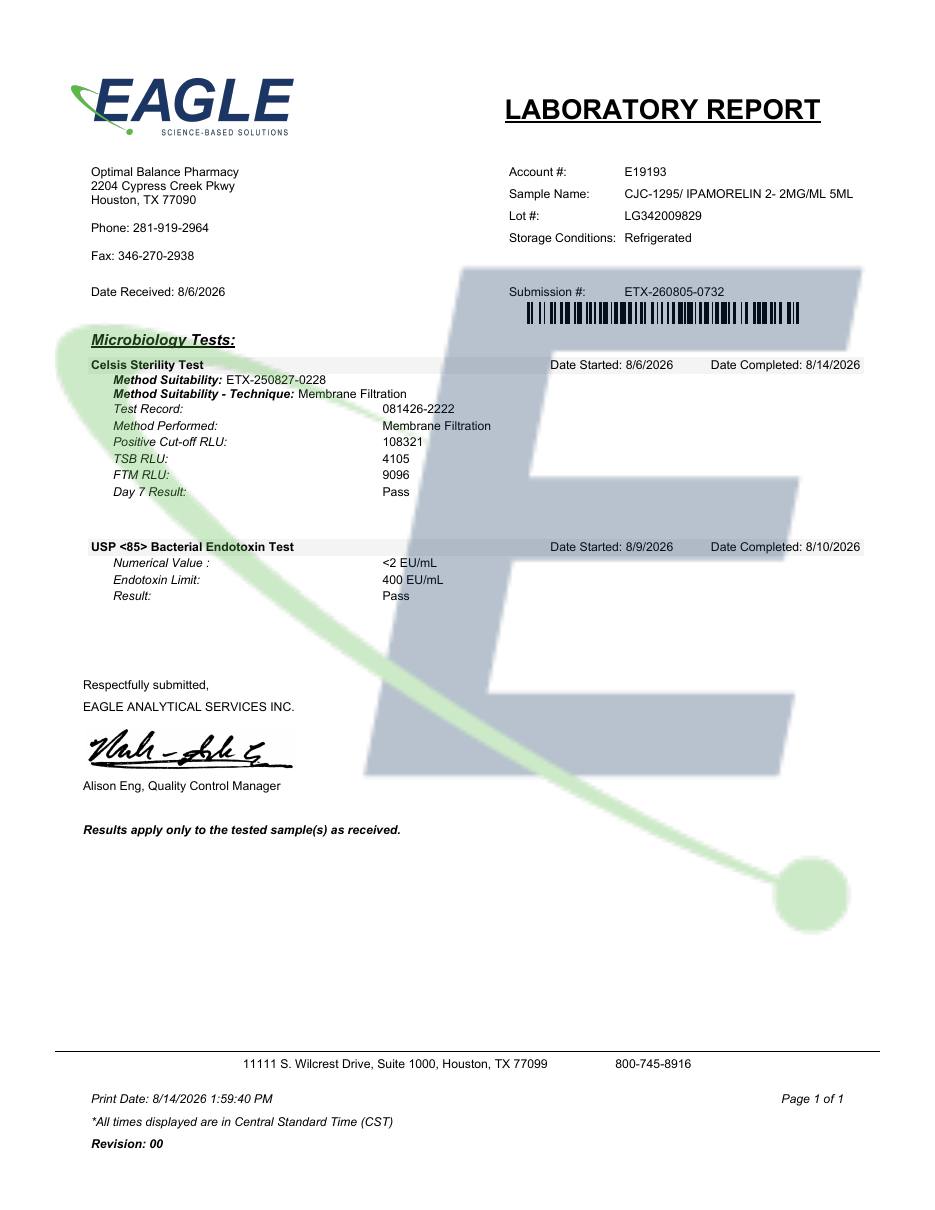
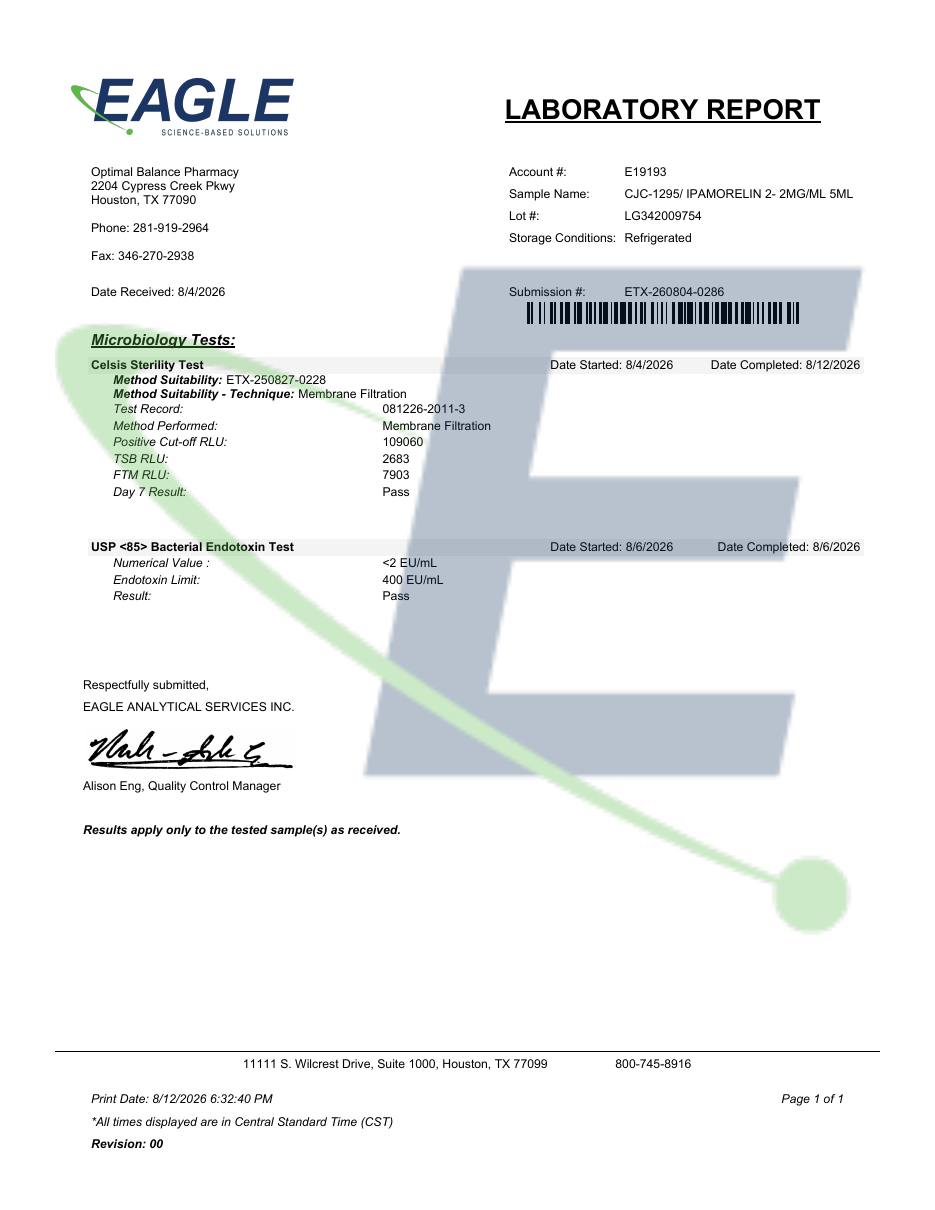
- Inject subcutaneously into the abdomen, upper outer thigh, or back of the upper arm. Rotate sites between injections. Use a 31-gauge, 5/16-inch (8 mm) needle on a U-100 insulin syringe. CJC-1295/Ipamorelin ships pre-reconstituted from a licensed U.S. 503A compounding pharmacy and is ready to inject. Once opened, keep the vial in the fridge and use it until it is empty or it reaches the date printed on its label, whichever comes first.
- Does CJC-1295/Ipamorelin increase testosterone?
- CJC-1295/Ipamorelin does not directly increase testosterone. The peptides act on growth hormone-releasing pathways at the pituitary, not on testicular Leydig cells or the HPG axis. Some users report improvements in energy and libido, which are typically attributed to indirect effects of better sleep and improved body composition rather than an actual T increase. If testosterone optimization is your goal, ask your provider about TRT options separately.
- Is CJC-1295/Ipamorelin a steroid?
- No. CJC-1295 and Ipamorelin are peptides, not steroids. They do not contain a steroid backbone, do not bind to androgen receptors, and do not suppress the HPG axis the way exogenous testosterone or anabolic steroids do. The peptides stimulate the body's own growth hormone production through receptor binding at the pituitary; growth hormone is also not a steroid. WADA classifies GH secretagogues separately from anabolic-androgenic steroids.