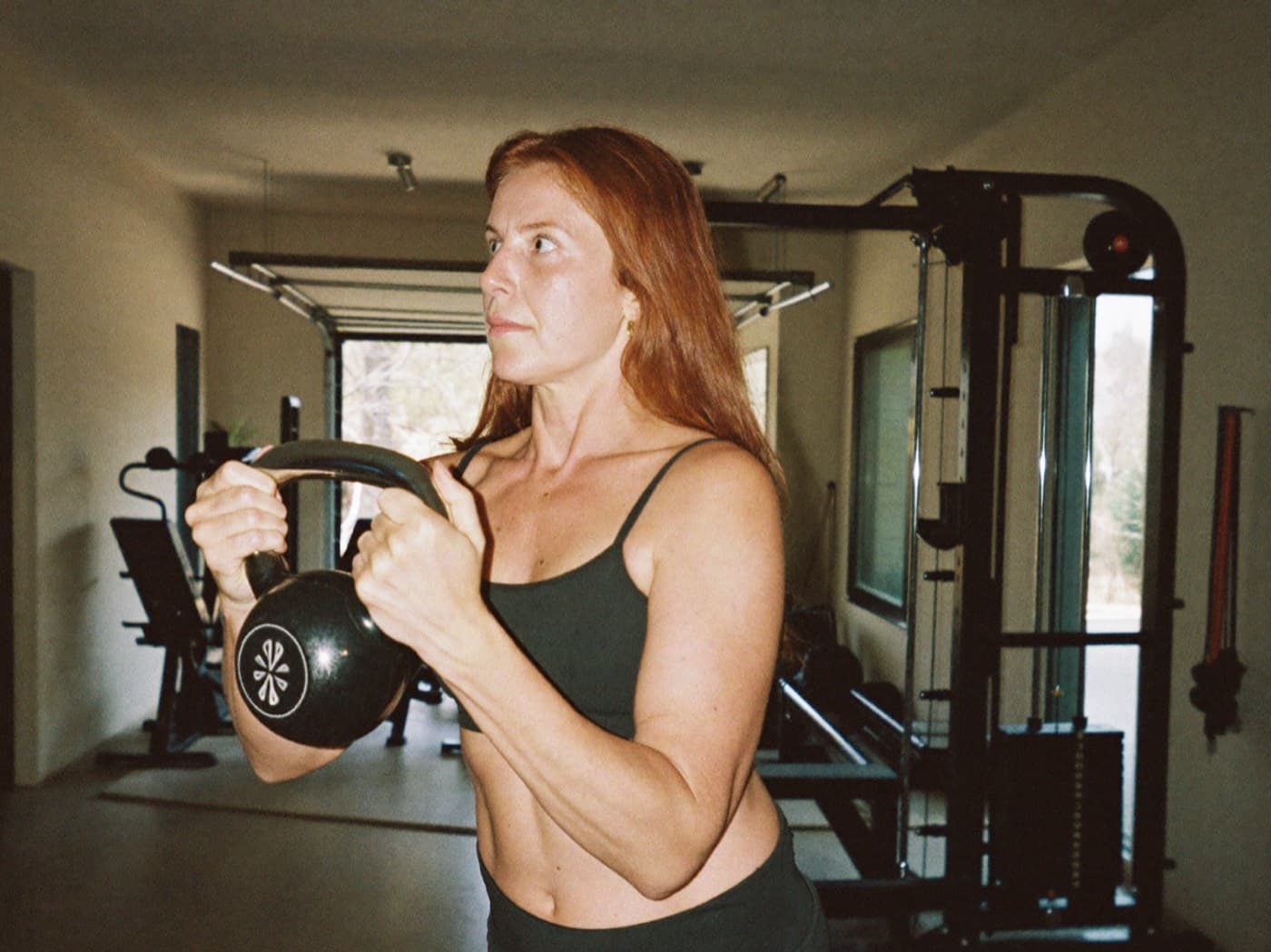
Women's muscle guide
Best peptides for female muscle growth, honestly ranked
 Medically reviewed by Dr. Jonathan Snipes, MD and Kim Callender, NP, FNP-BC. Last reviewed September 29, 2026.
Why it gets harder
Women start losing lean mass in midlife
In the SWAN study, which scanned 1,246 women over years, lean mass began to decline at the start of the menopause transition while the rate of fat gain doubled (Greendale et al. (SWAN), JCI Insight 2019). Less muscle means less strength, a lower metabolism and, later, a higher risk of falls.
The good news is that muscle responds to training at any age. The question is what, if anything, a peptide adds on top.
−0.2%
Average yearly change in lean mass during the menopause transition, after gains before it.
Start here
What actually builds muscle in women
- 1Resistance trainingTwo to three sessions a week of lifting, machines, bands or bodyweight work. It is the one strong recommendation in the sarcopenia guidelines. (Dent et al. (ICFSR guidelines), J Nutr Health Aging 2018)
- 2Enough proteinAt least 1.0 to 1.2 grams per kilogram of body weight a day for older adults, and at least 1.2 if you are active. For a 70 kg (154 lb) woman, that is roughly 70 to 85 grams. (Bauer et al. (PROT-AGE), J Am Med Dir Assoc 2013)
The same guidelines make no recommendation for anabolic hormones (Dent et al. (ICFSR guidelines), J Nutr Health Aging 2018). If you have kidney disease, ask your doctor before raising protein.
The peptide options
Where each peptide fits, and what the evidence says
Ranked by how directly each one relates to muscle, not by how much it is marketed.
- 1SermorelinRaises your own growth hormone
In a 16-week study of women and men aged 55 to 71, growth hormone rose in both, but lean mass rose only in the men. (Khorram et al., J Clin Endocrinol Metab 1997)
- 2CJC-1295 / IpamorelinTwo growth hormone signals in one vial
Raises growth hormone in short-term studies. No published trial has measured muscle in women.
- 3TesamorelinVisceral fat, not muscle
Cut deep belly fat in a 12-month trial that included 21 women, with no difference by sex. It is a fat tool, not a muscle builder. (Makimura et al., J Clin Endocrinol Metab 2012)
- 4BPC-157Recovery from training strain
Studied mostly in animals for tendon and soft-tissue healing. No human muscle-growth data.
On a GLP-1 for weight? About a quarter of the weight lost on tirzepatide in trials was lean mass (Look et al. (SURMOUNT-1 DXA), Diabetes Obes Metab 2025), so training and protein matter even more. See keeping muscle on a GLP-1.
If you want to add one
Our three most common picks for women who train
Growth hormone peptides are not for pregnancy or breastfeeding, active cancer or a pituitary tumor. One $39 provider review covers up to three.
 Gentle growth hormone supportSermorelinEvening injections, five days a week. The most common starting point for women who already train.$80/15mgView
  Stronger growth hormone pulseCJC-1295/IpamorelinTwo peptides that trigger growth hormone release through different receptors, in one vial.$100/10mg+10mgView
  RecoveryBPC-157For women training hard or nursing a sore tendon or joint. Animal evidence, so expectations should stay modest.$80/15mgView
How to get it
A provider reviews it with your training goals
We serve 28 states plus Washington, DC. No subscription.
Browse muscle and body composition- 1Complete a short intakeYour history, current medications and a pregnancy screen.
- 2A provider reviews itA licensed provider reviews it for a one-time $39 and prescribes only if it fits.
- 3The pharmacy ships itOptimal Balance Pharmacy, a licensed 503A pharmacy, compounds and ships it to you.
Frequently asked questions
- What are the best peptides for female muscle growth?
- Growth hormone peptides such as sermorelin and CJC-1295 with ipamorelin are the usual options, with BPC-157 for recovery. None has been shown to build muscle in women in a published trial. Resistance training and enough protein do the real work; a peptide is an add-on.
- Do peptides build muscle in women?
- Not on their own, based on the evidence we have. In the one sermorelin study that included women, growth hormone rose but lean mass increased only in the men. Strength training and protein are what reliably build and keep muscle.
- Why do women lose muscle in their 40s and 50s?
- In the SWAN study, lean mass started to decline at the beginning of the menopause transition, while the rate of fat gain doubled. That lasted until about two years after the final period. Resistance training slows or reverses the loss at any age.
- How much protein does a woman need to build muscle?
- Expert guidance for older adults is at least 1.0 to 1.2 grams per kilogram of body weight a day, and at least 1.2 if you are active. For a 70 kg woman, that is roughly 70 to 85 grams a day. People with serious kidney disease need their doctor's advice first.
- How do I keep muscle on a GLP-1?
- Lift two to three times a week and prioritize protein at every meal. In the SURMOUNT-1 body-scan substudy, about a quarter of the weight lost on tirzepatide was lean mass, so both matter more when you are eating less.
- Are muscle-building peptides safe for women?
- Growth hormone peptides are not for pregnancy or breastfeeding, active cancer or a pituitary tumor. A provider reviews your history before prescribing. Stick to prescribed, pharmacy-made products rather than research-grade vials.