- What is in the Tirzepatide Microdose vial?
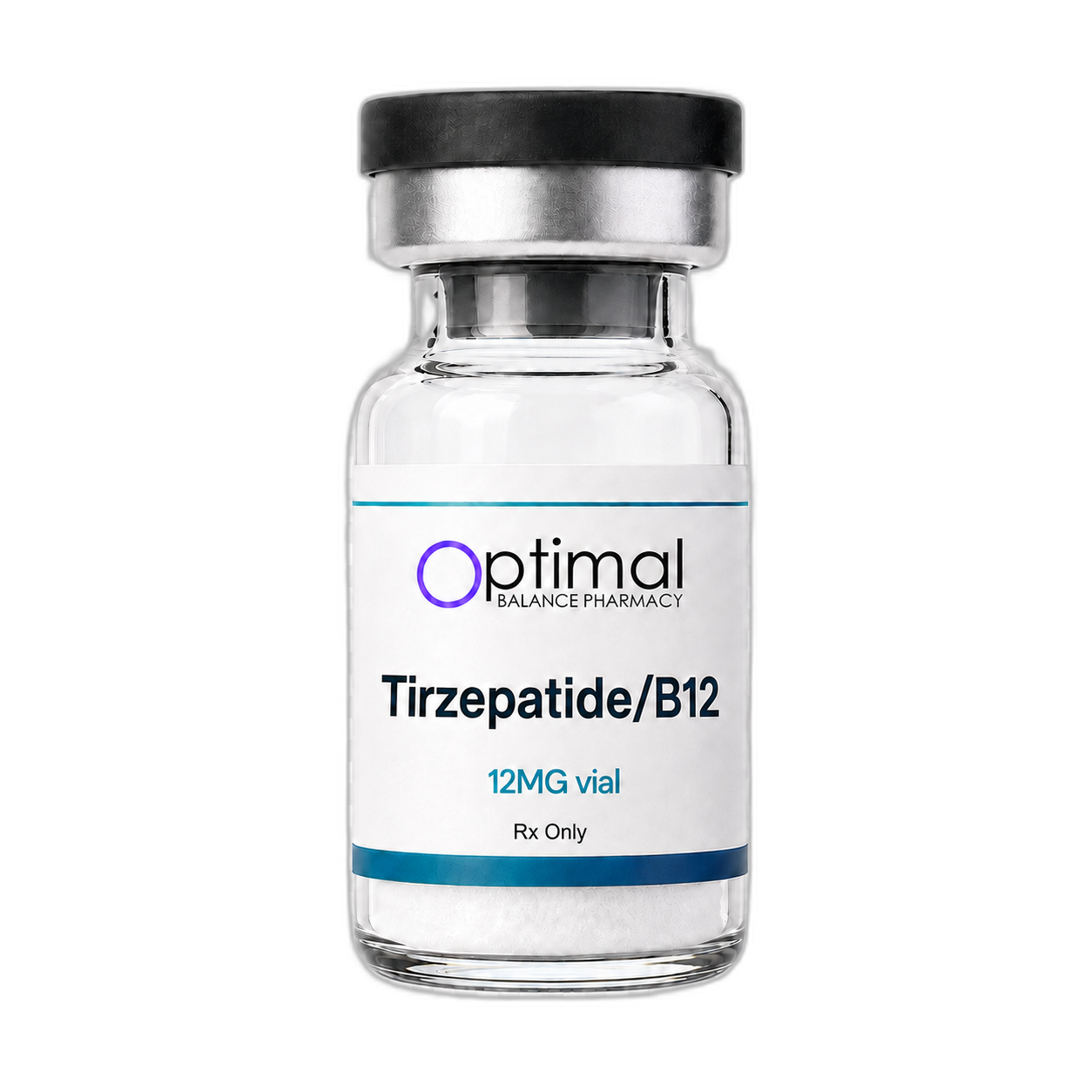
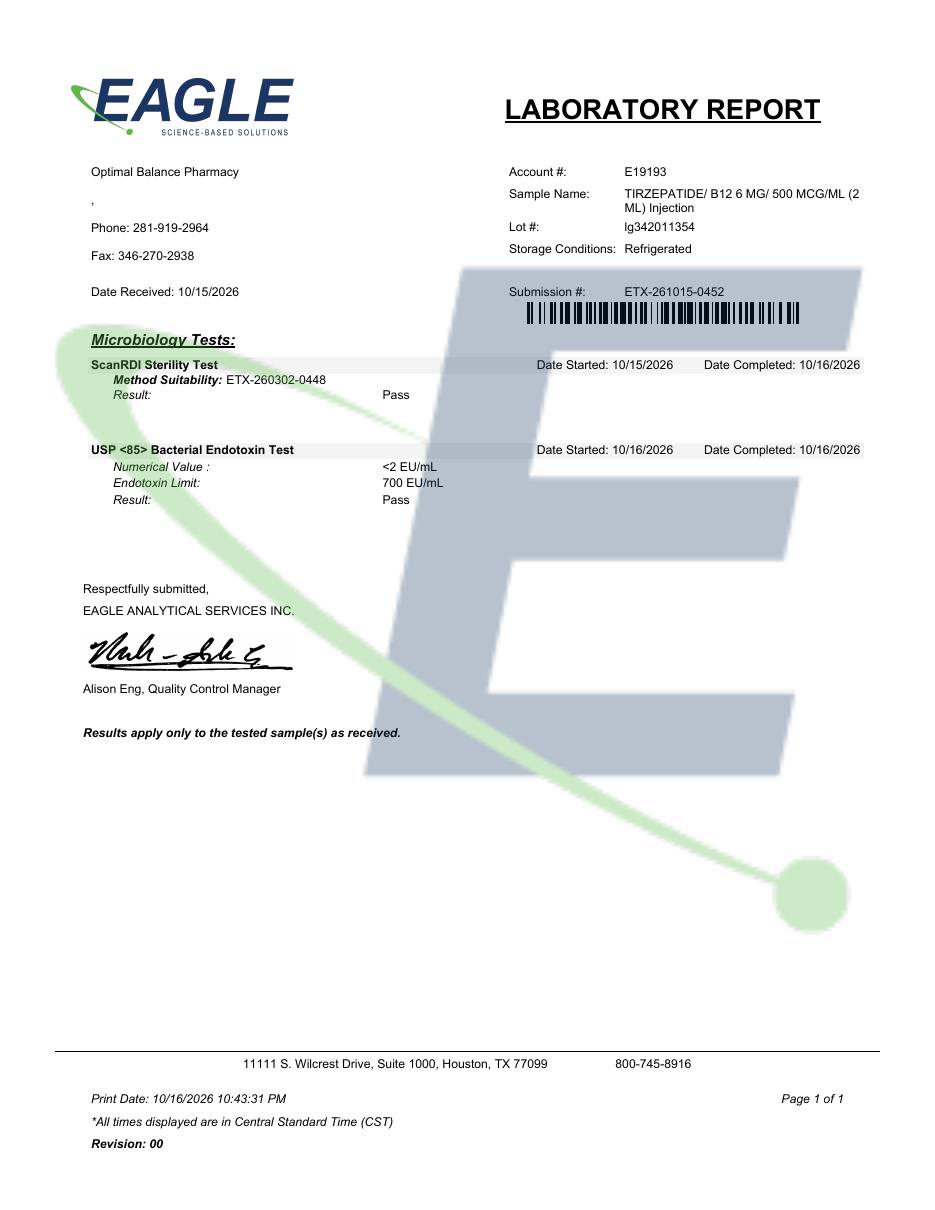
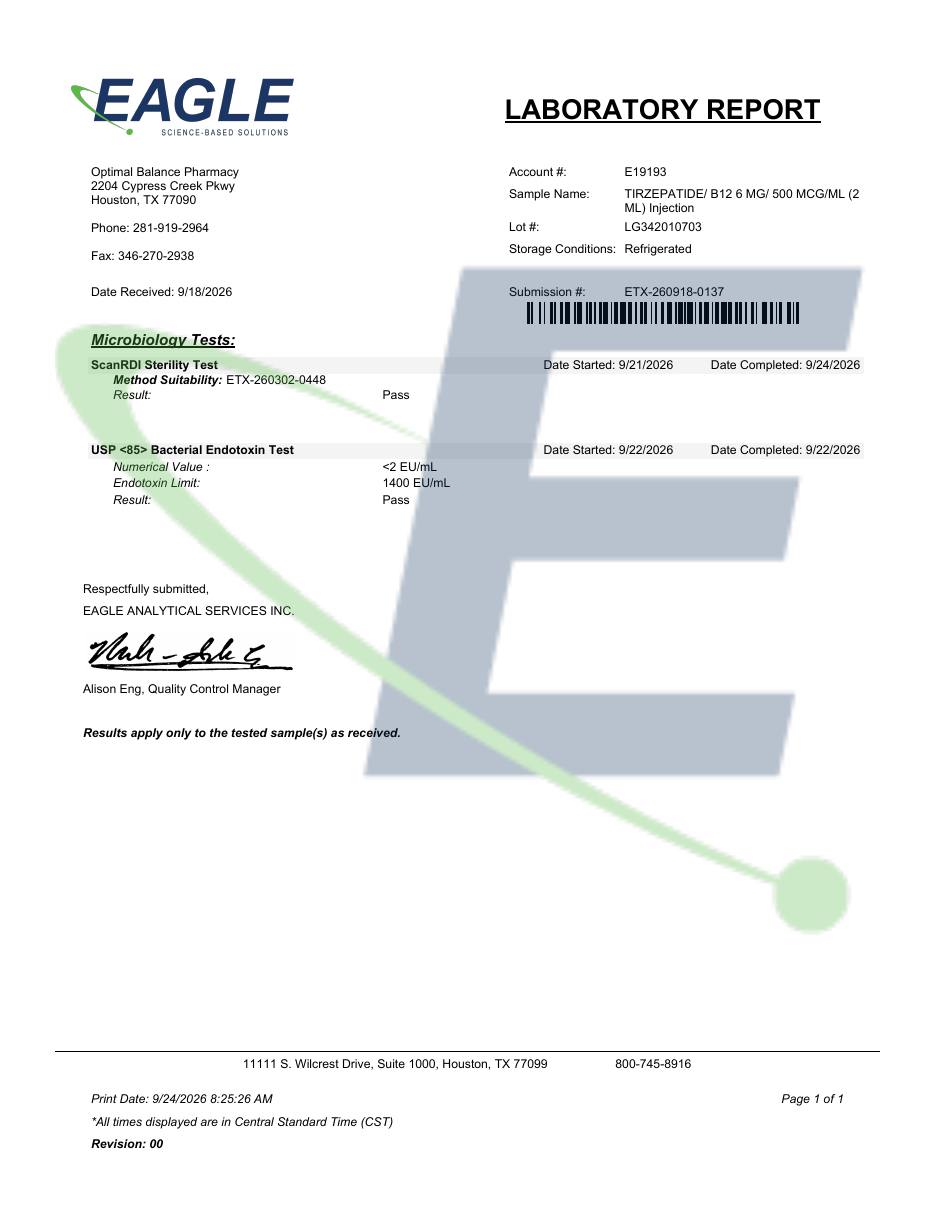
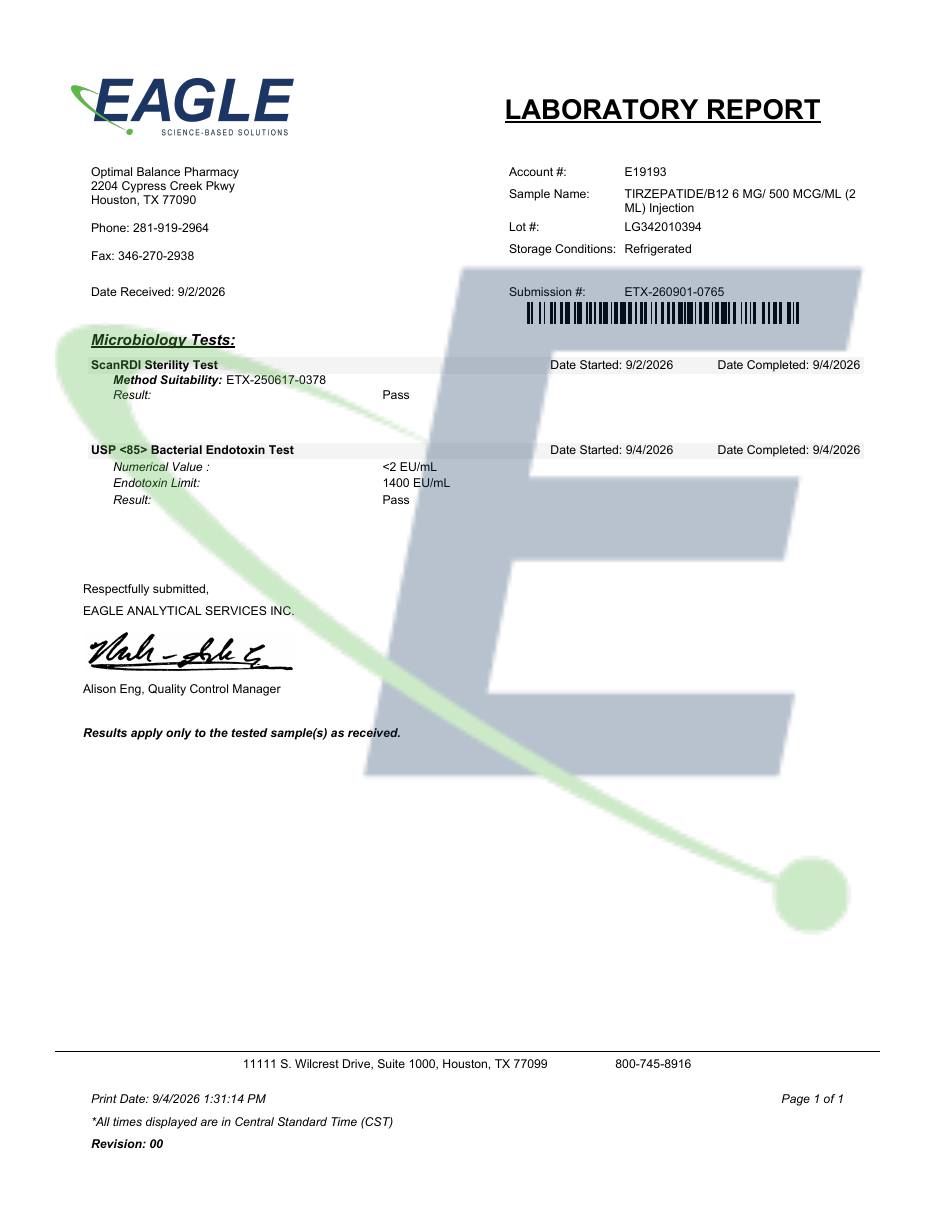
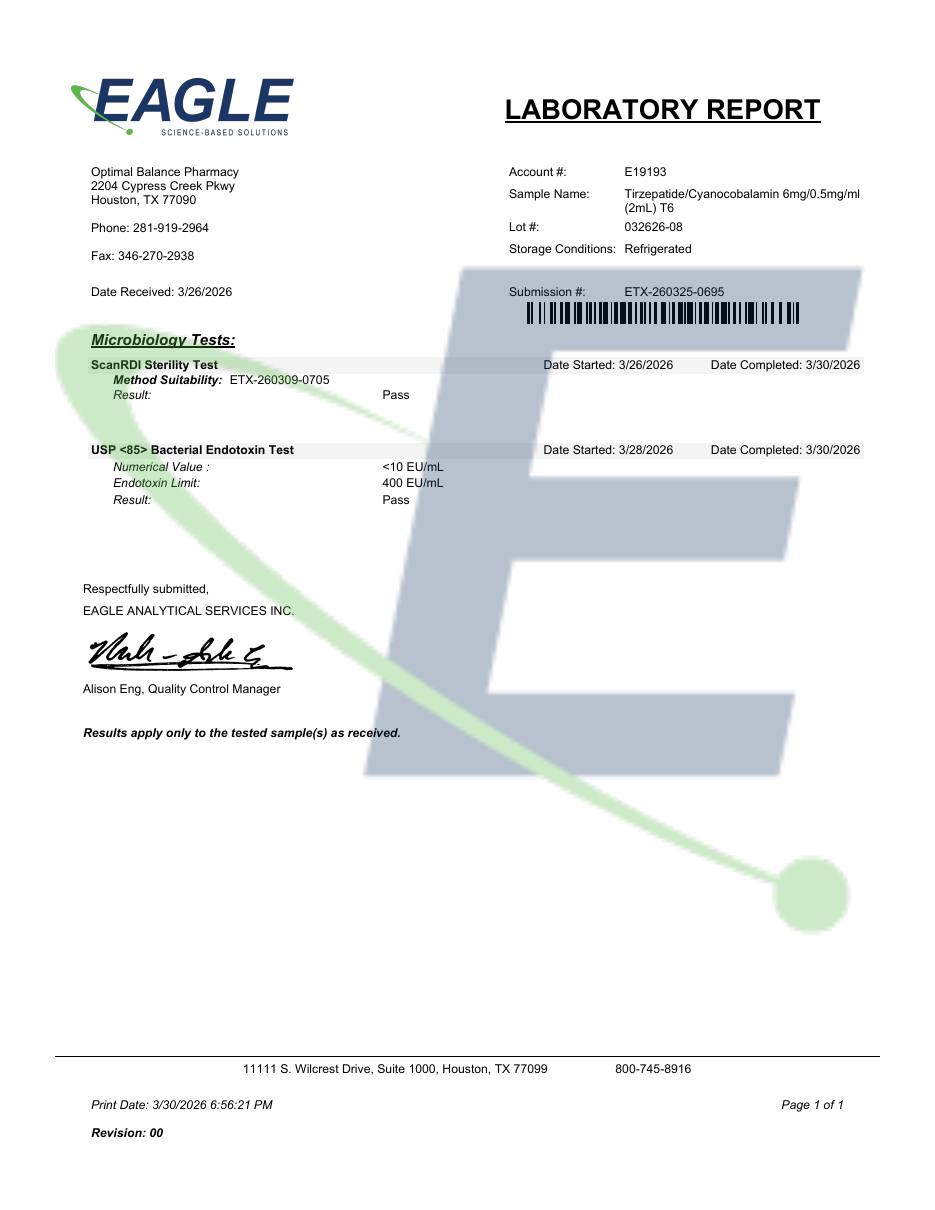
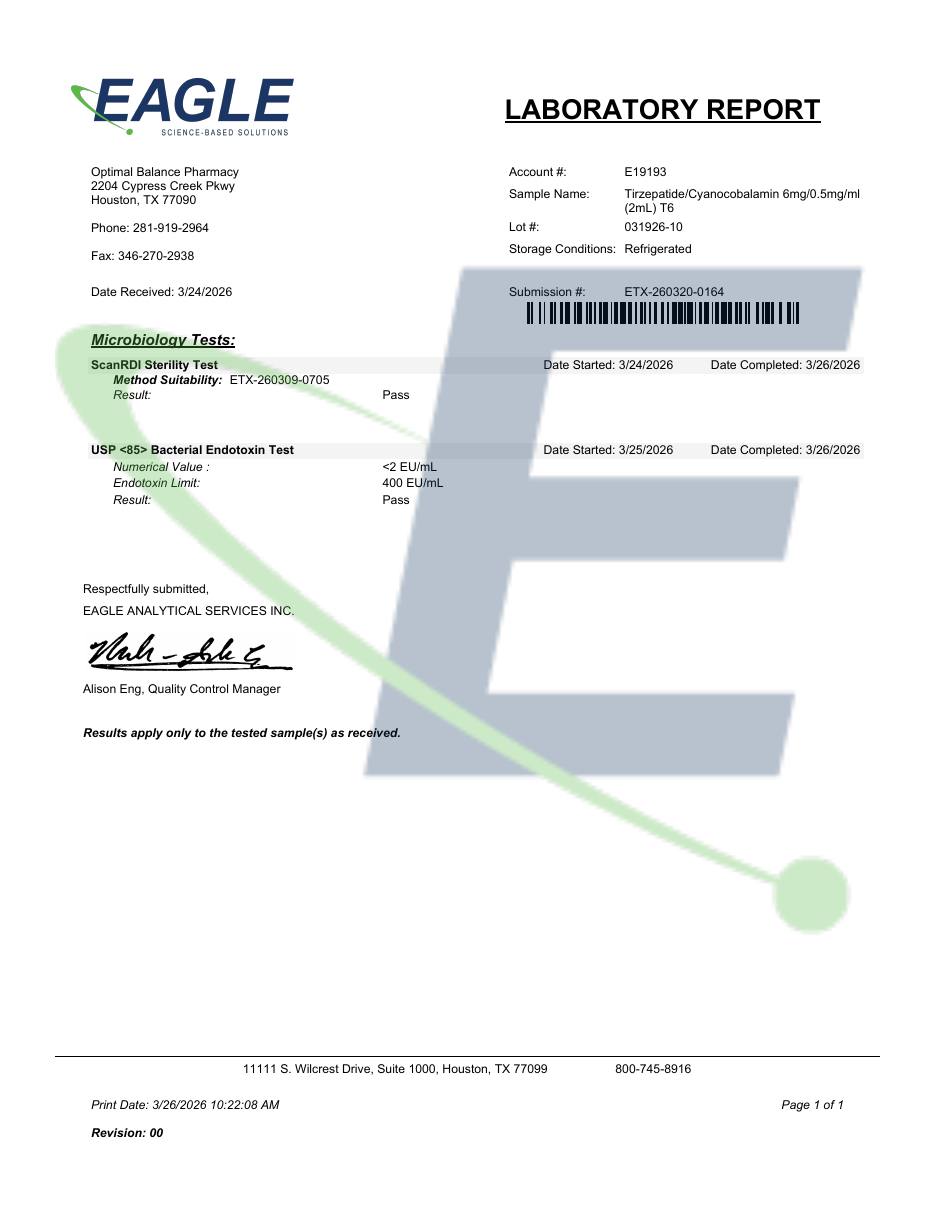
- Each vial contains compounded tirzepatide co-formulated with cyanocobalamin (vitamin B12), suspended together in the same solution. It is not pure tirzepatide and it is not a research-use vial. The pharmacy compounds it under a 503A patient-specific prescription, and the label lists both ingredients. The vial is 2 mL at 6 mg/mL (12 mg total) for $36, plus a flat $39 medical review. Every batch is tested by Eagle Analytical Services for sterility and bacterial endotoxin (USP <85>); the Certificate of Analysis is published on this page.
- Is this pure tirzepatide?
- No. This is a compounded medication, which means the pharmacy prepares tirzepatide together with vitamin B12 in one vial rather than dispensing the tirzepatide molecule on its own. Anyone selling a vial labeled pure tirzepatide for human use outside a compounding pharmacy is selling a research-use product without a prescription. The tirzepatide in this vial is the same active ingredient as Mounjaro and Zepbound, and the B12 does not change how it binds the GIP and GLP-1 receptors.
- How is this different from the standard Tirzepatide/B12 vial?
- It is the same vial. Same pharmacy, same 6 mg/mL concentration, same 12 mg total, same $36 price. The only difference is the dose your provider writes: the microdose protocol starts at 5 units (0.3 mg) twice weekly, about 0.6 mg per week, where the standard protocol starts at 25 units (1.5 mg) twice weekly. Because you draw less per injection, a single vial lasts considerably longer.
- Why is vitamin B12 in a weight loss injection?
- Cyanocobalamin acts as a soluble carrier in the formulation and doubles as an energy-supporting cofactor for patients in a caloric deficit. B12 supports red blood cell production and methylation pathways that come under load during fat loss. It is pharmacologically inert with respect to weight loss, so it does not add to your results and it does not change tirzepatide's pharmacology. The B12 carrier is a formulation choice by a licensed U.S. 503A compounding pharmacy, not by Rx Peps Direct.
- What if I cannot tolerate B12?
- Tell your provider during the intake. Patients with a documented B12 sensitivity, an MTHFR methylation variant, or a history of reacting to cyanocobalamin should ask about the Tirzepatide/B6 + Glycine formulation instead, which uses glycine and vitamin B6 as the carrier and contains no B12. It is the same tirzepatide active ingredient. Do not order this microdose vial if you have reacted to B12 before.
- What is the starting dose for the tirzepatide microdose protocol?
- 5 units on a U-100 insulin syringe, injected subcutaneously twice weekly, 3 to 4 days apart. On the 6 mg/mL vial, 5 units equals 0.05 mL, which is 0.3 mg per injection or 0.6 mg per week. For comparison, the standard Rx Peps Direct protocol is 1.5 mg twice weekly and branded Zepbound starts at 2.5 mg once weekly. Your provider confirms or adjusts the units at review and may step the dose up every 4 weeks as tolerated. Always verify the concentration printed on your vial before drawing.
- How long does a microdose vial last?
- At the 5 unit starting dose, a 12 mg vial holds far more than the standard protocol would use, but the Beyond Use Date governs how long you can actually use it. The BUD is 90 days from compounding under USP <797> sterile compounding standards and is printed on every vial label. Once opened, keep the vial in the fridge and use it until it is empty or it reaches the date printed on its label, whichever comes first. Refrigerate at 36 to 46 degrees Fahrenheit and do not freeze. Discard at the BUD even if solution remains.